실패 박물관 FailMuseum

실패 박물관 FailMuseum

실패해도 괜찮은
50일의 놀이 여행
A 50-day play journey
where failing is fine

아이의 타고난 기질을 먼저 살펴보고, AI 시대에 꼭 필요한 네 가지 힘 중 무엇이 부족한지 그래프로 보여줍니다. 그 부족한 힘을 채우는 순서로 50가지 놀이를 하루에 하나씩 해나갑니다. It starts by looking at your child's innate disposition, then charts which of the four strengths the age of AI calls for still needs filling. From there you work through 50 plays — one a day — ordered to fill exactly that.

기기에만 저장Stored on device only 광고 없음No ads 계정 없음No account 한국어 · EnglishKorean · English iOS · AndroidiOS · Android

정답을 맞히는 능력보다 중요한 것 What matters more than getting the answer right

AI는 주어진 데이터 안에서 최적의 답을 찾습니다. 아이에게 필요한 건 틀렸을 때 왜 안 되었는지 보고 다시 해보는 힘, 그리고 아직 없는 문제를 스스로 정의하는 힘입니다. AI finds the best answer within the data it is given. What a child needs is the strength to look at what went wrong and try again — and to define problems nobody has set yet.

회복탄력성Resilience

실패해도 다시 일어나는 힘Getting back up after failing

무너진 블록을 다시 쌓고, 속상한 마음을 스스로 달래는 연습. 신체적 도전도 이 축에 함께 담았습니다. Rebuilding the tower that fell, and learning to settle an upset heart. Physical challenges belong to this axis too.

창의적 상상력Creative imagination

없던 문제를 상상해내는 힘Imagining problems that don't exist yet

"만약에…?" 질문, 제한된 재료로 하는 미션, 도구의 용도를 바꿔보는 놀이. "What if…?" questions, missions with limited materials, and using tools for something they were never meant for.

유연한 관점Flexible perspective

실패를 받아들이고 다르게 보는 힘Accepting failure and seeing it differently

일부러 망쳐보고, 그 얼룩을 괴물로 살려내고, 누가 더 웃기게 실패하는지 겨뤄보는 놀이들. Spoiling it on purpose, turning the stain into a monster, and competing over who can fail more hilariously.

자기주도성Self-direction

스스로 묻고 선택하는 힘Asking and choosing for themselves

하루 계획을 직접 짜고, 불편한 점을 스스로 찾고, AI에게 질문을 만들어 던져보는 놀이. Planning their own day, spotting what's inconvenient, and making up questions to ask an AI.

쓰는 방법How it works

설문은 한 번만 하면 되고, 그 뒤로는 하루에 한 화면만 보면 됩니다. The survey happens once. After that there is one screen a day.

  1. 아이를 소개합니다Introduce your child

    애칭과 생년월일만 받습니다. 나이에 맞는 놀이인지 알려주기 위해서만 쓰고, 기기 밖으로 나가지 않습니다. Just a nickname and a date of birth — used only to tell you whether a play suits that age. Neither leaves the device.

  2. 18개 질문으로 기질을 봅니다18 questions find the temperament

    상황 선택 10문항으로 네 가지 기질 유형을, 4단계 응답 8문항으로 지금의 역량 수준을 봅니다. 한 화면에 한 질문이라 금방 끝납니다. Ten situation questions place the temperament among four types; eight scale questions read where the strengths stand now. One question per screen.

  3. 결과와 역량 그래프를 봅니다Read the result and the chart

    기질 유형, 네 가지 힘의 현재 수준, 그리고 이 아이에게 특히 필요한 것을 세 탭으로 나눠 보여줍니다. The temperament type, where each of the four strengths stands, and what this child needs most — split across three tabs.

  4. 하루에 하나씩, 50일One a day, for 50 days

    부족한 힘을 채우는 놀이가 앞쪽에 옵니다. 놀이가 끝나면 아이의 반응과 메모를 남기고, 다시 하고 싶은 놀이는 별로 표시해 둡니다. Plays that fill what's missing come first. When one ends, record the reaction and a note — and star the ones worth repeating.

화면 둘러보기A look around

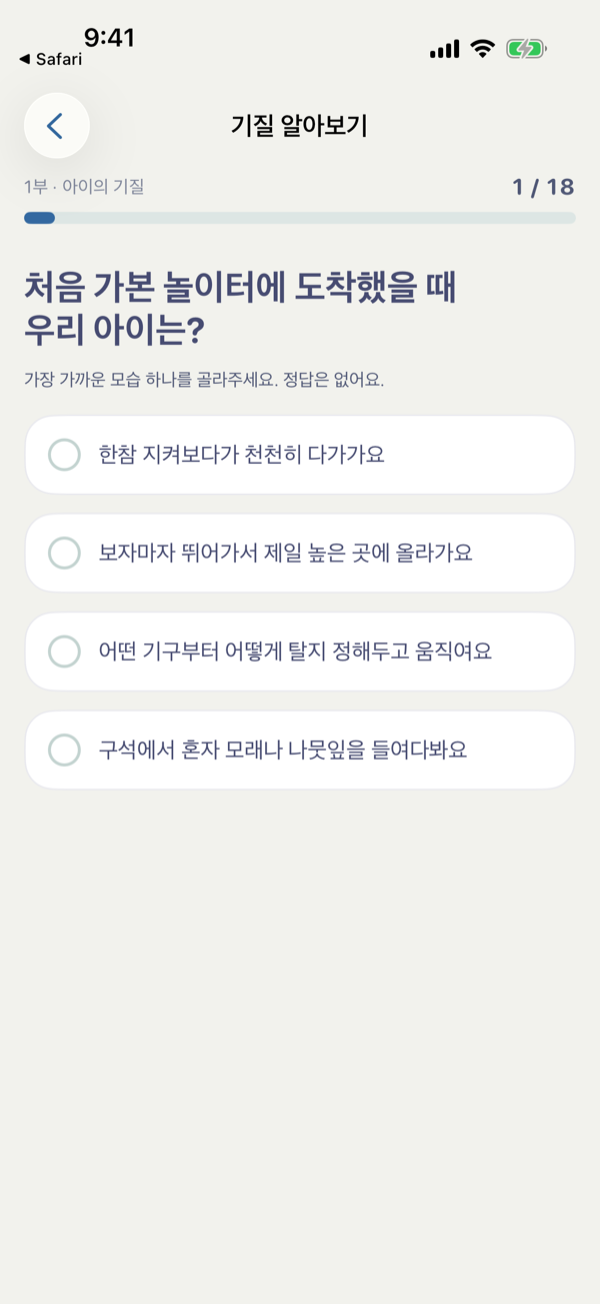
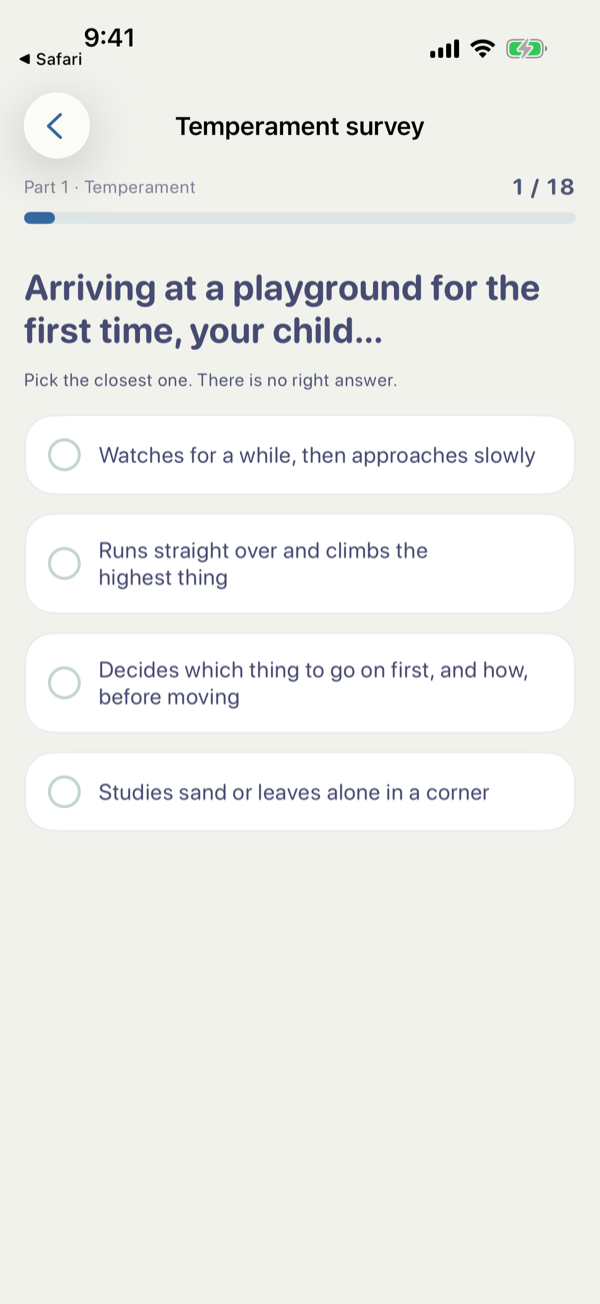
상황을 고르는 기질 설문 화면 Temperament survey screen with four situation options
1 · 기질 설문1 · Temperament survey

정답이 없는 18개 질문 18 questions with no right answer

"처음 가본 놀이터에 도착했을 때 우리 아이는?" 같은 상황을 주고 가장 가까운 모습을 고릅니다. 좋고 나쁨을 묻는 척도가 아니라 어느 쪽에 가까운지만 봅니다. You get a situation — "Arriving at a playground for the first time, your child…" — and pick the closest one. It asks which way your child leans, not how well they score.

  • 상황 선택 10문항 — 보기 네 개가 각각 한 기질에 대응합니다. "모두 그렇다"로 쏠리는 편향이 생기지 않습니다.
  • 4단계 응답 8문항 — 역량 네 축을 축마다 두 문항씩 봅니다. 최근 한 달을 떠올리며 고르면 됩니다.
  • 한 화면에 한 질문이고, 고르면 바로 다음으로 넘어갑니다. 이전 버튼으로 되돌아갈 수 있습니다.
  • Ten situation questions — each of the four options maps to one temperament, so there is no "all of the above" bias to fall into.
  • Eight scale questions — two per strength. Answer them thinking of the past month.
  • One question per screen, and picking an option advances immediately. A back button takes you to the previous one.
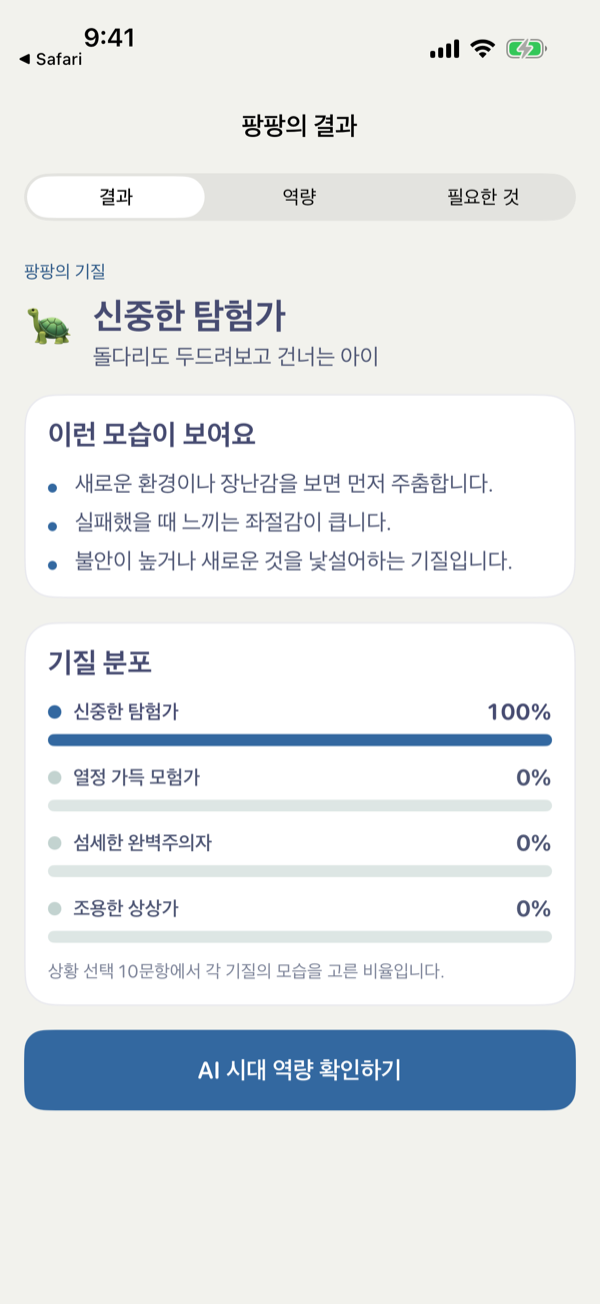
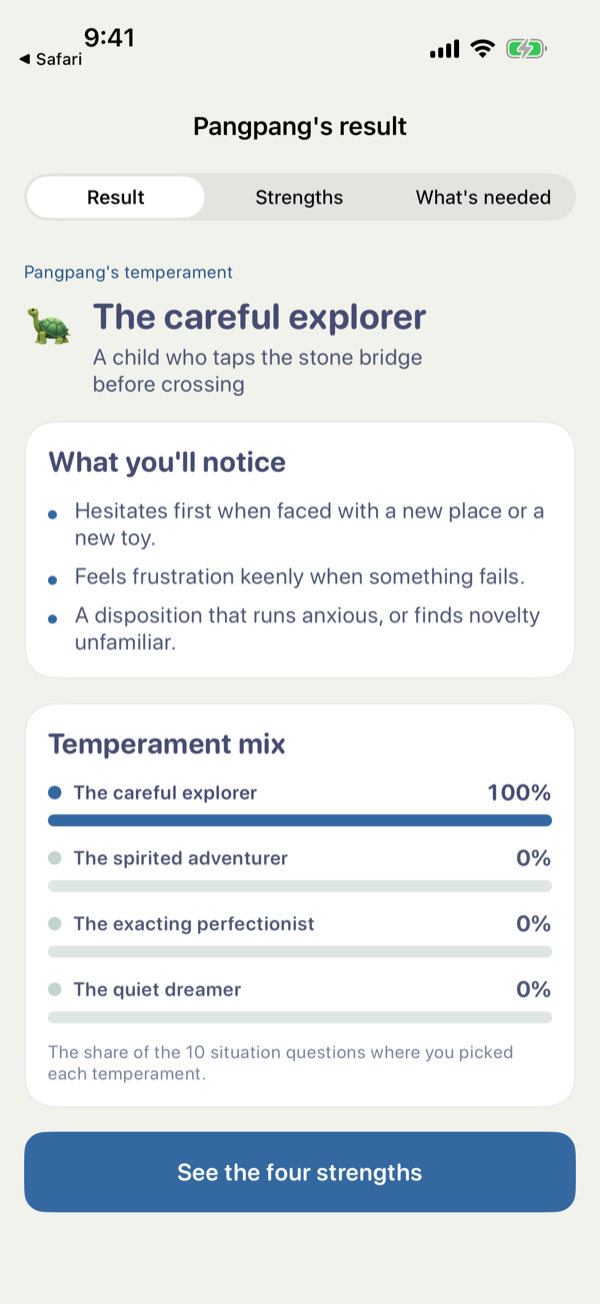
기질 유형과 네 유형의 분포를 보여주는 결과 화면 Result screen showing the temperament type and the mix
2 · 기질 결과2 · Temperament result

네 유형 중 어디에 가까운지 Which of the four types fits

조심스러운 관찰자 · 저돌적인 모험가 · 꼼꼼한 설계자 · 상상 속 몽상가. 네 유형 중 가장 높게 나온 쪽을 별칭과 함께 보여주고, 그 기질에서 흔히 보이는 모습을 목록으로 적어줍니다. The cautious observer, the spirited adventurer, the precise planner, the dreamer. The highest-scoring type is shown with its nickname, plus a list of what it usually looks like day to day.

  • 분포 그래프 — 1위만 색을 채우고 나머지는 회색으로 둡니다. 유형마다 고유색을 주지 않은 건 색만으로 뜻을 전하지 않기 위해서입니다.
  • 두 기질이 비슷하면 알려줍니다 — 1·2위 차이가 작으면 그렇다고 적어주고, 놀이 추천 순서에 두 기질을 모두 반영합니다.
  • 공인 심리 검사가 아닌 자체 문항이라, 결과는 놀이를 고르기 위한 참고 자료입니다.
  • The mix — only the top type is filled in; the rest stay grey. Giving each type its own hue would make colour the sole carrier of meaning.
  • It tells you when two are close — if the top two nearly tie, it says so, and the play order reflects both.
  • These are the app's own questions, not a licensed scale, so the result is a guide for choosing plays.
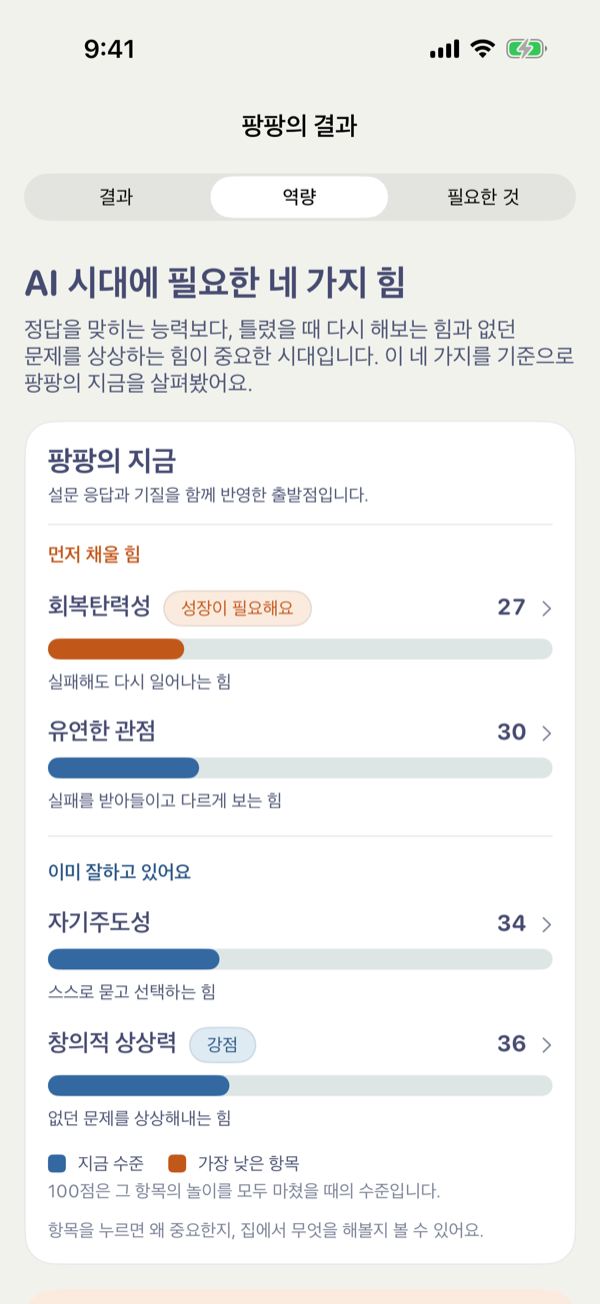
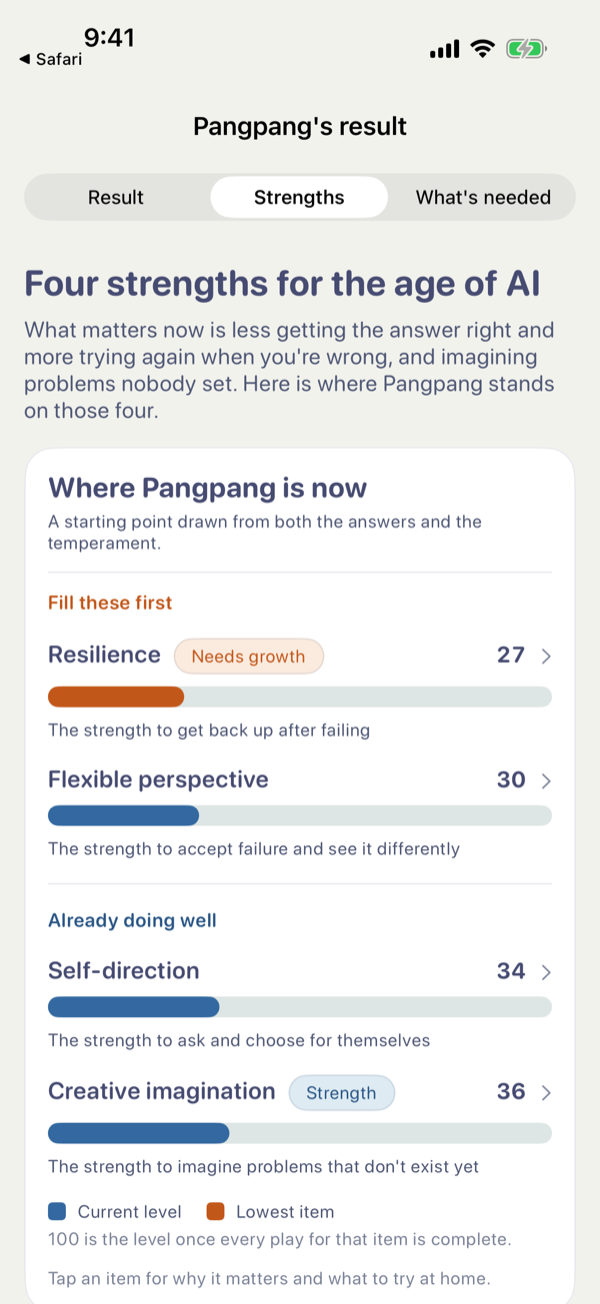
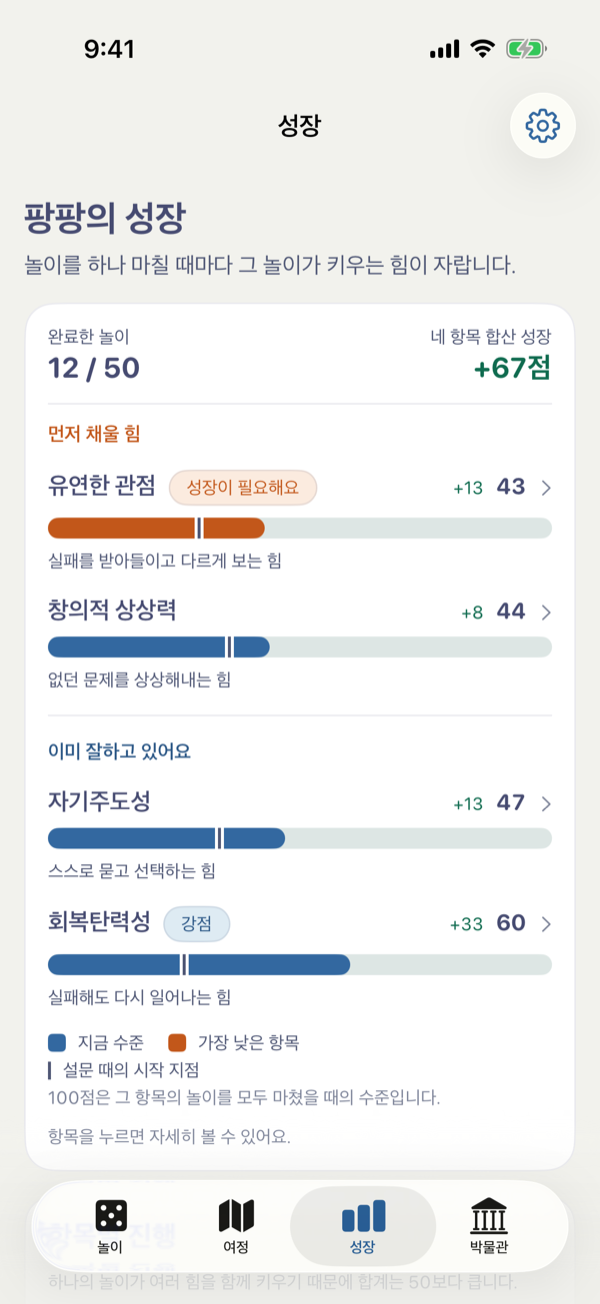
네 가지 역량을 수평 막대로 보여주는 차트 Horizontal bar chart of the four strengths
3 · 역량 그래프3 · Strengths chart

먼저 채울 힘이 맨 위에 What to fill first sits at the top

네 가지 힘을 낮은 순서로 세웁니다. 이 앱이 하려는 일은 부족한 힘을 채우는 것이므로, 먼저 손댈 항목이 맨 위에 와야 하고 아래의 안내와 50일 코스 순서도 모두 같은 순서를 따릅니다. The four strengths are listed lowest first. The point of the app is to fill what's missing, so what you'll work on first belongs at the top — and the guidance below and the 50-day order follow the same sequence.

  • '먼저 채울 힘' / '이미 잘하고 있어요' 두 묶음으로 나뉩니다.
  • 가장 낮은 항목은 색이 바뀌면서 '성장이 필요해요' 라벨이 함께 붙습니다. 색만으로 말하지 않아 색각 이상에서도 읽힙니다.
  • 항목을 누르면 왜 중요한지, 집에서 무엇을 해볼지, 아이에게서 어떻게 보이는지가 열립니다. 네 개를 한 화면에 펼치지 않은 건 페이지가 지나치게 길어지기 때문입니다.
  • 점수는 설문 응답 55%에 기질에서 추정한 출발선 45%를 섞은 값입니다.
  • Split into "Fill these first" and "Already doing well".
  • The lowest item changes colour and carries a "needs growth" label, so it never relies on colour alone.
  • Tap an item for why it matters, what to try at home, and what it looks like in your child. Expanding all four inline would make the page far too long.
  • Scores blend the survey answers (55%) with a baseline estimated from the temperament (45%).
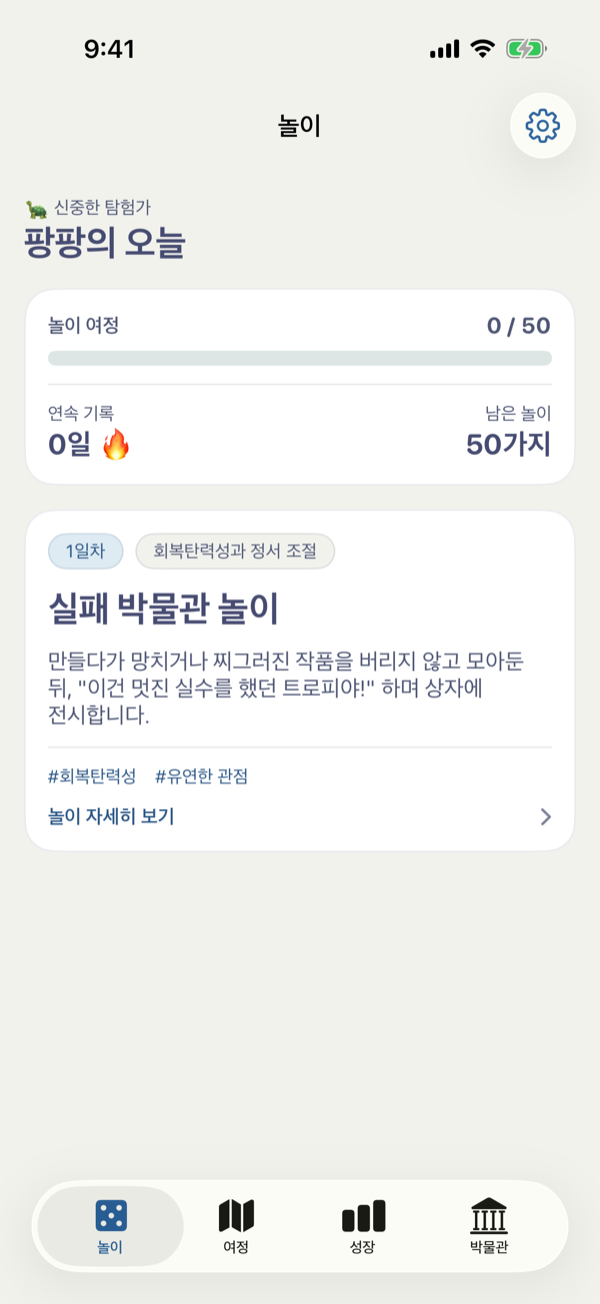
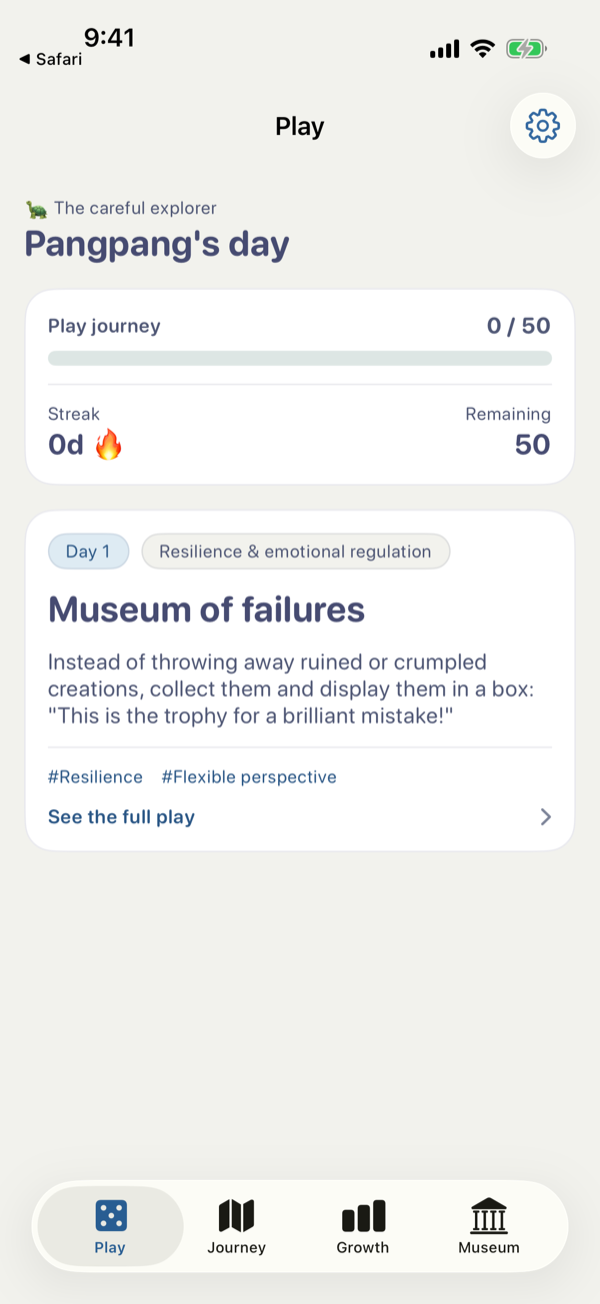
오늘 할 놀이 한 가지를 보여주는 화면 Today's single play, shown as a card
4 · 오늘의 놀이4 · Today's play

하루에 딱 하나만 열립니다 Exactly one opens each day

오늘 할 놀이 하나와 연속 기록·남은 개수만 보여줍니다. 카드를 누르면 방법, 준비물, 아이의 배움, 주의할 점이 나옵니다. One play for today, plus your streak and how many remain. Tap the card for the method, what you need, what your child learns, and what to watch out for.

  • 준비물을 미리 알려줍니다 — 스케치북, 종이컵, 테이프처럼 챙길 것이 있으면 적혀 있고, 없으면 "바로 할 수 있어요"라고 말해줍니다.
  • 주의할 점이 함께 옵니다 — "부모가 대신 고쳐주지 말고 기다려 주세요"처럼 놀이의 의미를 망치지 않는 선을 알려줍니다.
  • 기질에 특히 맞는 놀이면 그 이유를 위에 덧붙입니다.
  • 오늘 몫을 끝내면 다음 놀이는 내일 열립니다. 몰아서 할 수 없습니다.
  • Materials up front — a sketchbook, paper cups, tape; and when nothing is needed it says so.
  • Cautions travel with it — things like "don't fix it for them, wait" that keep the play from losing its point.
  • If a play suits your child's temperament especially well, it says why.
  • Finish today's and the next one opens tomorrow. There is no bingeing.
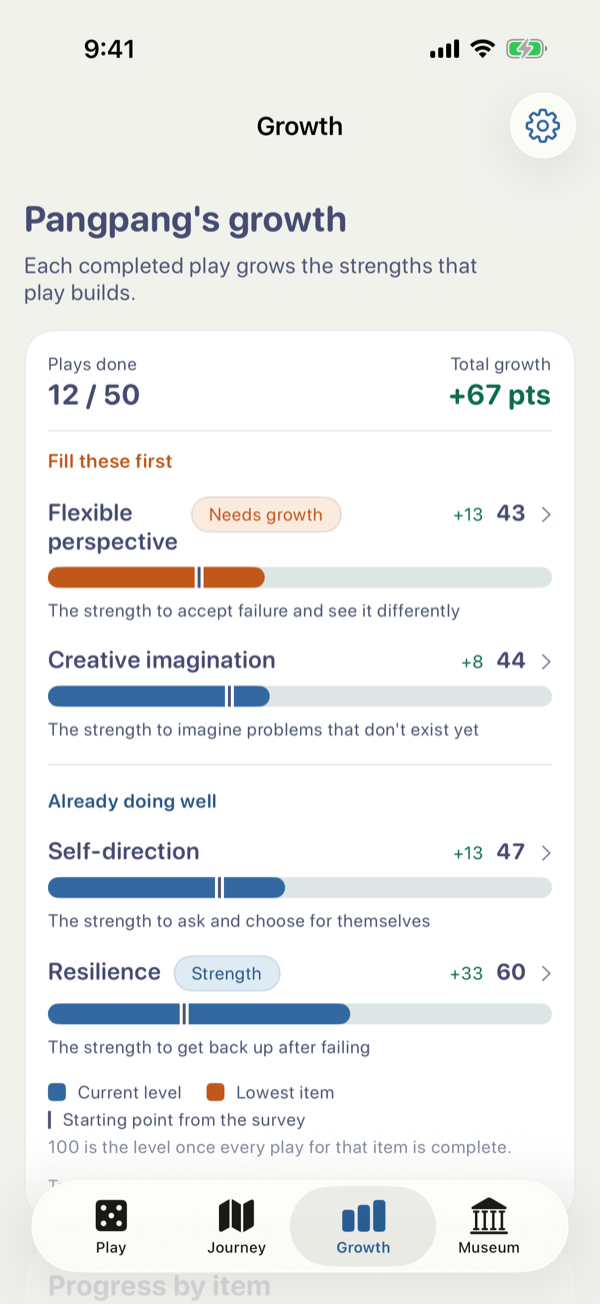
네 가지 힘이 얼마나 자랐는지 보여주는 성장 화면 Growth screen showing how far each strength has come
5 · 성장5 · Growth

시작 지점과 지금을 나란히 The starting point beside where you are

놀이를 하나 마칠 때마다 그 놀이가 키우는 힘이 자랍니다. 막대 위의 세로 눈금이 설문 때의 출발점이라, 지금까지 얼마나 왔는지 한눈에 보입니다. Each finished play grows the strengths it builds. The tick on each bar marks where you started at the survey, so the distance travelled is visible at a glance.

  • 항목마다 증가분을 +숫자로 적어줍니다. 네 항목 합산 성장도 위에 함께 보여줍니다.
  • 항목별 진행 — 각 힘을 키우는 놀이 중 몇 개를 마쳤는지 셉니다. 하나의 놀이가 여러 힘을 함께 키우기 때문에 합계는 50보다 큽니다.
  • 순서는 역량 그래프와 같습니다. 화면을 오가도 어긋나지 않습니다.
  • Per-item gains appear as +numbers, with the total across all four at the top.
  • Progress by item counts how many of the plays that build each strength you've done. One play often builds several, so these add up past 50.
  • The order matches the strengths chart, so moving between screens never contradicts itself.
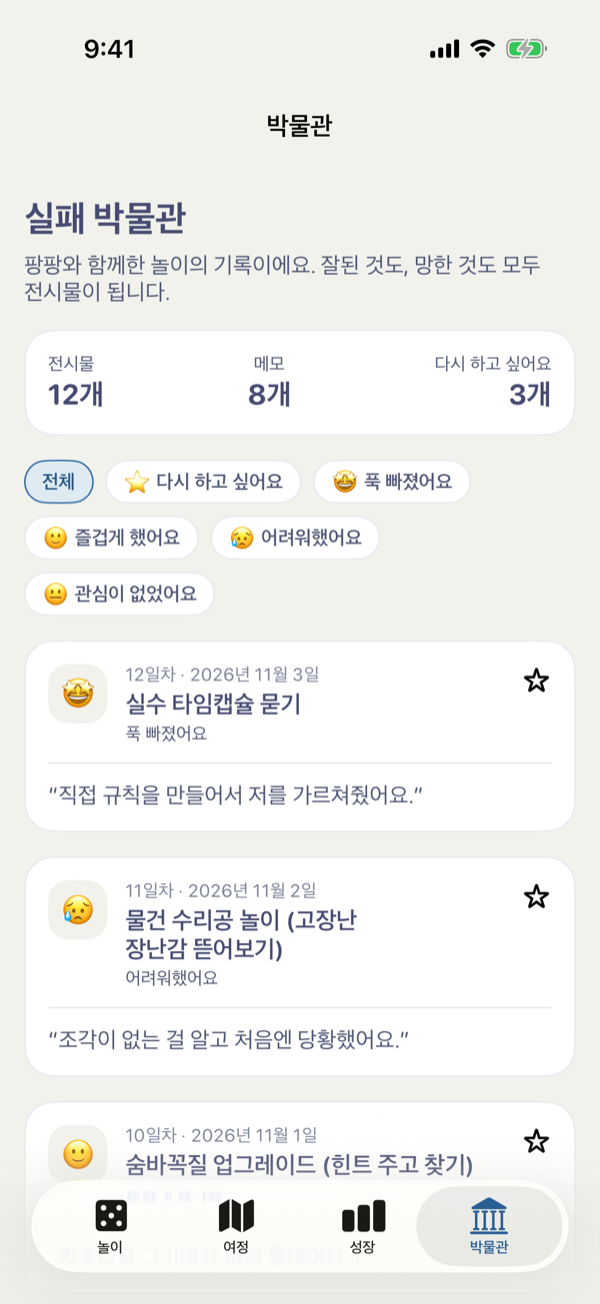
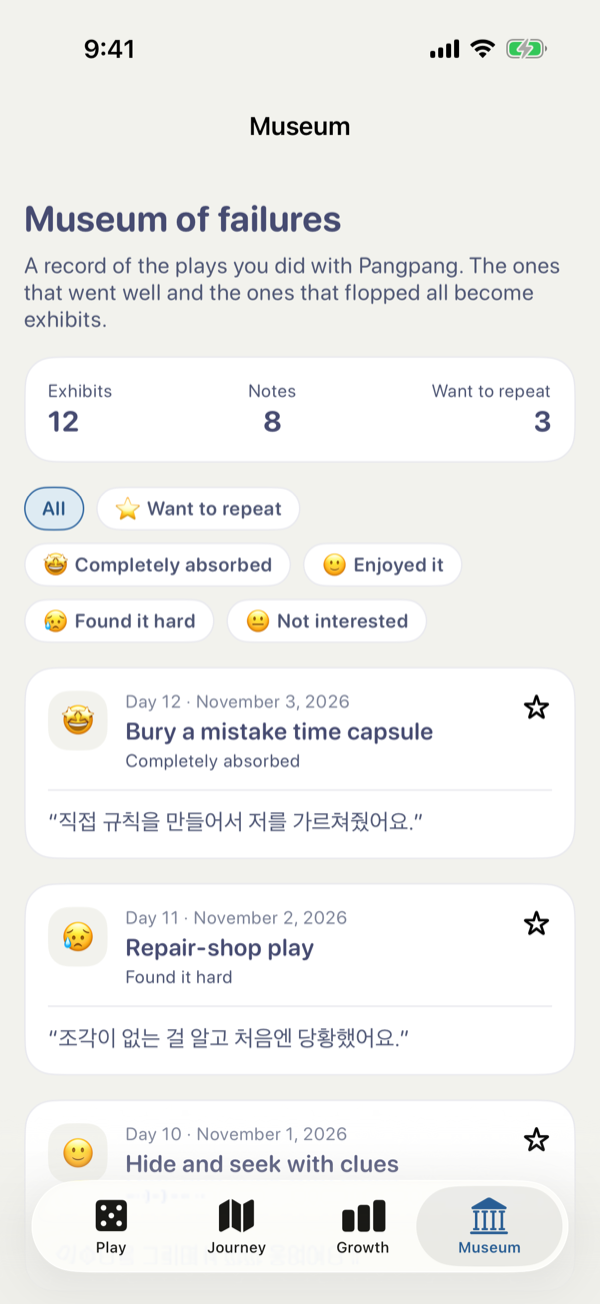
지난 놀이 기록을 전시물처럼 모아둔 박물관 화면 Museum screen collecting past play records
6 · 실패 박물관6 · Museum of failures

잘된 것도 망한 것도 전시물 What landed and what flopped, both on display

앱 이름이 여기서 나왔습니다. 놀이가 끝날 때 남긴 반응과 메모가 날짜순으로 쌓이고, 망한 날도 똑같이 전시됩니다. 실패를 지우지 않고 모아두는 것이 이 앱의 태도입니다. This is where the name comes from. The reaction and note you left at the end of each play stack up by date, and the days that flopped are exhibited just the same. Keeping failures rather than deleting them is the whole stance.

  • 반응 네 가지 — 푹 빠졌어요 · 즐겁게 했어요 · 어려워했어요 · 관심이 없었어요. 거부한 날도 기록으로 남길 수 있습니다.
  • 필터 — 반응별로, 또는 '다시 하고 싶어요'로 표시한 것만 모아 볼 수 있습니다.
  • 별 표시는 목록에서 바로 켜고 끌 수 있고, 표시한 놀이는 놀이 탭에도 모입니다.
  • 같은 놀이를 다시 했다면 그 기록을 덧붙일 수 있어 "지난번과 무엇이 달라졌는지"가 남습니다.
  • Four reactions — completely absorbed, enjoyed it, found it hard, not interested. The days they refused get recorded too.
  • Filters — by reaction, or just the ones you starred as worth repeating.
  • Stars toggle straight from the list, and starred plays also gather in the Play tab.
  • Did it again? Add a repeat session, and what changed since last time stays on record.

이렇게 만들었습니다How it was built

하루에 하나만 열립니다Only one opens a day

50개를 한꺼번에 열어두면 몰아서 하거나 미리 다 읽어버려 '하루에 하나씩'이 무의미해집니다. 그래서 여정에서도 다음 날 것까지만 보여줍니다. Open all 50 at once and you binge them or read ahead, and "one a day" stops meaning anything. So the journey reveals only up to tomorrow.

진단이 아닙니다Not a diagnosis

공인 심리 검사 척도를 쓰지 않고 자체 문항으로 구성했습니다. 결과는 아이에게 맞는 놀이를 고르기 위한 성향 참고 자료입니다. It uses its own questions, not a licensed psychological scale. The result is a guide for choosing plays, nothing more.

약한 축을 먼저The weakest axis first

놀이 순서는 부족한 역량의 가중치로 정하고, 같은 성격의 놀이가 세 번 연달아 나오지 않게 섞습니다. 기질에 맞는 놀이는 앞으로 당겨집니다. The order is weighted by what's missing, shuffled so three plays of the same kind never follow each other, and nudged toward the child's temperament.

색만으로 말하지 않습니다Never colour alone

그래프에서 가장 낮은 항목은 색을 바꾸는 동시에 '성장이 필요해요' 라벨을 붙입니다. 색각 이상에서도 구분되는 값만 골라 썼습니다. The lowest item changes colour and carries a "needs growth" label. Every pair was checked to stay distinguishable under colour-vision deficiency.

수집하는 정보가 없습니다No data is collected

이 앱에는 서버가 없고 네트워크 통신 코드 자체가 없습니다. 안드로이드 버전에는 인터넷 권한도 선언되어 있지 않습니다. 아이 정보와 모든 기록은 기기 안의 파일 한 개에만 저장되고, 앱을 삭제하면 함께 지워집니다. The app has no server and contains no networking code at all — the Android build does not even declare the internet permission. Your child's details and every record live in a single file on the device, and deleting the app deletes them with it.

개인정보 처리방침 전문 보기 → Read the full privacy policy →

받는 곳Where to get it

iOS와 Android 모두 같은 내용입니다. 기록은 기기에만 저장되므로 기기 사이에 옮겨지지 않습니다. The iOS and Android builds are the same app. Records stay on the device, so they do not move between devices.

App Store와 Google Play 모두 받을 수 있습니다. Available now on the App Store and Google Play.

App Store에서 받기 · Google Play에서 받기 Download on the App Store · Get it on Google Play

App Store에서 실패 박물관 받기 QR 코드
App Store
Google Play에서 실패 박물관 받기 QR 코드
Google Play

휴대전화 카메라로 QR을 비추면 해당 스토어로 바로 갑니다. Point your phone camera at a code to open that store.